The Science of Structural Drying: How Professionals Save Northern Virginia Homes After Water Damage
When water invades a Northern Virginia home, what happens in the 72 hours after extraction determines whether your property recovers fully or suffers long-term structural damage. Structural drying is the technical process of removing moisture from building materials — wood framing, drywall, concrete, subfloors, and insulation — using industrial equipment and precise environmental controls. PSolution Services brings the science of psychrometrics to every water damage restoration project in Ashburn, Leesburg, Sterling, Fairfax, Reston, Herndon, and across Loudoun County and Fairfax County, ensuring your home dries thoroughly and safely.
The Science Behind Structural Drying
Professional structural drying is governed by psychrometrics — the science of air, moisture, and temperature relationships. Understanding these principles is what separates effective restoration from the common mistake of simply placing fans and hoping materials dry on their own. Three critical factors control drying speed and effectiveness: temperature, relative humidity, and airflow. Professional restoration companies manipulate all three simultaneously to create optimal drying conditions inside your home.
Warm air holds more moisture than cool air. By maintaining indoor temperatures between 70 and 90 degrees Fahrenheit, we maximize the air's capacity to absorb moisture from wet building materials. Commercial dehumidifiers then remove that absorbed moisture from the air, lowering relative humidity to between 30 and 40 percent — creating a significant vapor pressure differential that pulls moisture out of materials and into the air. Strategic air movement from industrial air movers accelerates evaporation from material surfaces, completing the cycle. This coordinated approach dries structures in days rather than the weeks or months that natural drying would require.
Why Household Fans and Open Windows Fail
Homeowners in Northern Virginia often attempt to dry water damage using household fans, opening windows, and consumer-grade dehumidifiers. While understandable, this approach fails for several important reasons. Household fans move air across surfaces but cannot create the controlled environment needed for effective drying. Opening windows during Virginia's humid summers actually introduces more moisture into the home, slowing drying and potentially making the problem worse. Consumer dehumidifiers remove a fraction of the moisture that commercial units can handle — a residential unit might remove 30 to 50 pints per day, while our commercial units remove 200 pints or more per day each.
More critically, amateur drying cannot address moisture trapped inside wall cavities, beneath flooring, within ceiling assemblies, and behind cabinetry. This hidden moisture — invisible to the eye and undetectable without professional equipment — is where mold grows and structural damage develops. The dangerous phrase "it feels dry" leads many homeowners to stop drying efforts prematurely, leaving concealed moisture that causes problems for months or years afterward.
Professional Drying Equipment We Deploy
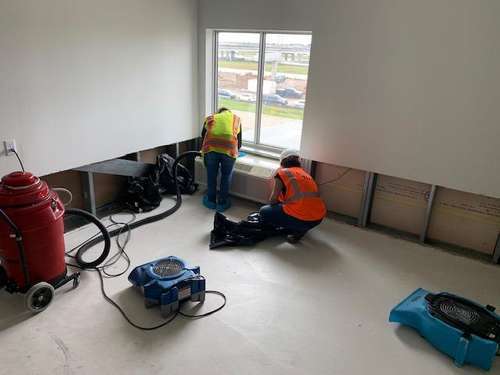
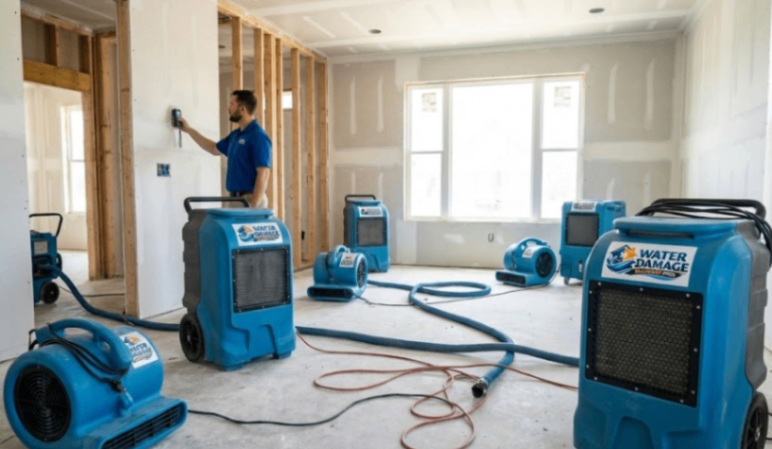
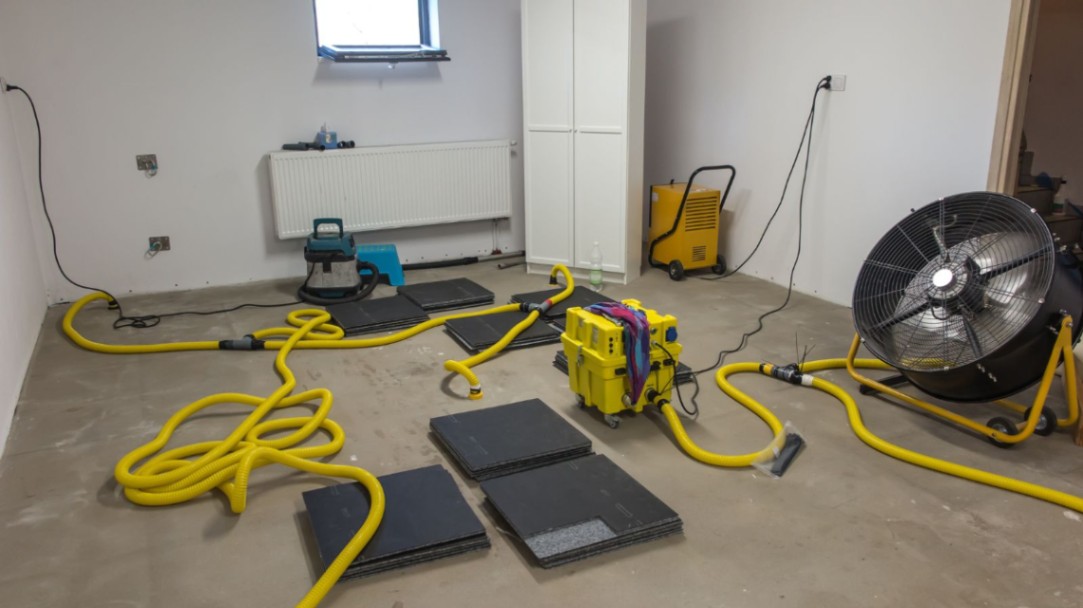
PSolution Services deploys commercial-grade drying equipment calibrated for the specific conditions in your Northern Virginia home. Our equipment arsenal includes low-grain refrigerant (LGR) dehumidifiers that achieve grain depression levels consumer units cannot approach, desiccant dehumidifiers for extreme moisture situations and cold-weather drying when refrigerant units lose efficiency, centrifugal air movers that direct high-velocity air across wet surfaces to maximize evaporation, axial air movers for large open areas where broad air circulation is needed, injectidry systems that force dry air directly into wall cavities and under flooring through small access points, and HEPA air scrubbers that filter airborne contaminants during the drying process.
The selection and placement of equipment is not random — our technicians calculate the specific equipment needs based on the volume of affected space, the types of materials involved, the amount of moisture present, and ambient conditions. This scientific approach ensures efficient drying while preventing over-drying that can cause its own form of damage.
Monitoring and Documentation
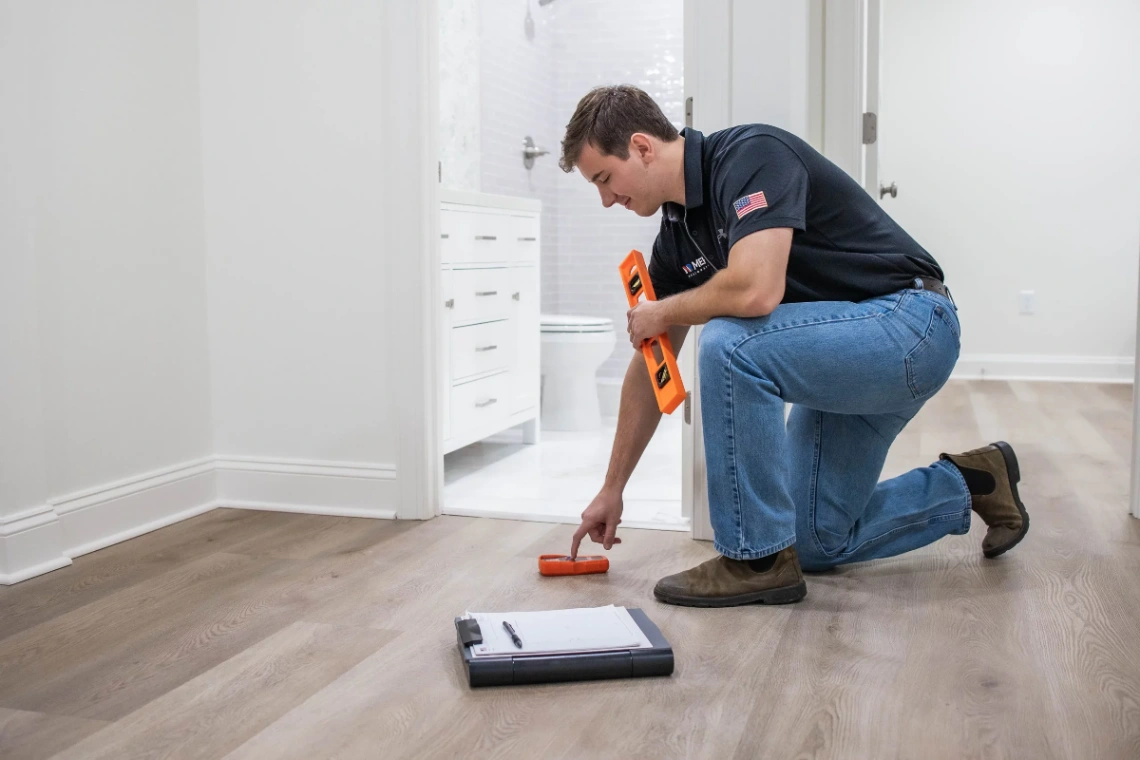
Throughout the structural drying process, PSolution Services technicians visit your Ashburn, Leesburg, Sterling, Reston, Herndon, or Fairfax home daily to monitor progress. Using calibrated moisture meters and thermo-hygrometers, we document moisture content in affected materials and environmental conditions in the drying area. This data drives equipment adjustments — repositioning air movers, adding or removing dehumidifiers, and modifying temperature settings to maintain optimal drying conditions.
Our detailed drying logs serve two critical purposes. First, they ensure the structure reaches target moisture levels verified by objective measurement rather than subjective assessment. Second, they provide your insurance company with professional documentation supporting the drying timeline and equipment usage, which directly affects claim approval and payment. Every reading, every equipment placement, every adjustment is recorded and available for your insurance adjuster's review.
Special Drying Challenges in Northern Virginia
Northern Virginia's climate creates specific structural drying challenges that our team manages daily. Summer humidity levels that regularly exceed 70 to 80 percent mean outdoor air cannot be used for drying — it would add moisture rather than remove it. Our closed-system approach recirculates indoor air through dehumidifiers regardless of outdoor conditions. Winter drying presents the opposite challenge — cold temperatures reduce dehumidifier efficiency, requiring supplemental heat or desiccant dehumidifiers that perform well in cold environments.
Many homes across Loudoun County and Fairfax County have complex floor assemblies — hardwood over plywood over subfloor with insulation beneath — that trap moisture in layers. Burst pipe water in wall cavities may require strategic removal of baseboards or small access cuts to allow direct airflow into enclosed spaces. Our injectidry systems address these enclosed areas without unnecessary demolition, preserving as much of your home's finish as possible.
When Is Structural Drying Complete?
Drying is complete when moisture content in affected materials returns to acceptable levels — typically matching the moisture content of similar unaffected materials in the same home. For wood framing and subfloor, this usually means moisture content below 15 percent. For drywall, content should be below similar unaffected drywall in the home. We never rely on subjective assessment — only calibrated instrument readings determine when your home is dry.
Rushing this process risks mold growth and structural deterioration. Extending it unnecessarily wastes your time and insurance resources. PSolution Services balances thoroughness with efficiency, achieving complete drying in the shortest time scientifically possible.
Frequently Asked Questions: Structural Drying
How long does structural drying typically take in Northern Virginia homes?
Most residential structural drying projects take 3 to 5 days, though severe water damage or complex building assemblies may require longer. PSolution Services monitors drying daily and keeps you informed of progress. Call 571-655-7207 for emergency drying services across Ashburn, Leesburg, Sterling, Fairfax, Reston, Herndon, and all of Northern Virginia.
Is the drying equipment very loud?
Commercial air movers and dehumidifiers produce noticeable noise — comparable to a loud household fan. Most homeowners in Loudoun County and Fairfax County find it manageable, especially since equipment typically runs for only 3 to 5 days. We position equipment to minimize disruption to sleeping areas when possible.
Can I stay in my home during structural drying?
In most cases, yes. The equipment runs in the affected areas while you continue living in unaffected parts of the home. If the damage is extensive or affects critical areas like the kitchen or all bathrooms, temporary relocation may be more comfortable.
Does insurance cover structural drying?
Yes — structural drying is a standard component of water damage insurance claims. PSolution Services provides detailed drying logs and moisture documentation that insurance adjusters need to approve and pay for drying services. Our documentation exceeds industry standards.
Professional Structural Drying Across Northern Virginia
Do not trust your home's recovery to household fans and guesswork. PSolution Services delivers scientific structural drying using commercial equipment, daily monitoring, and documented results. Serving Ashburn, Leesburg, Sterling, Fairfax, Reston, Herndon, and all communities in Loudoun County and Fairfax County. Call 571-655-7207 for 24/7 emergency drying — we respond fast and dry your home right.
Related Articles
Found this recovery protocol helpful?
Speak with our licensed specialists for emergency restoration in Virginia, Maryland, or DC.