Professional Dehumidification & Drying Equipment Guide | Northern Virginia Restoration
Why Professional Dehumidification Equipment Makes the Difference in Water Damage Recovery
When water damage strikes a Northern Virginia home, the extraction is just the beginning. The critical phase that determines whether your home is fully restored or develops chronic problems like mold, warping, and structural deterioration is structural drying and dehumidification. Understanding the equipment and science behind professional drying helps homeowners appreciate why this step requires certified technicians with commercial-grade equipment—not consumer dehumidifiers from the hardware store.
PSolution Services deploys industrial-grade drying systems throughout Ashburn, Leesburg, Sterling, Centreville, Reston, Herndon, Vienna, McLean, Great Falls, and all of Loudoun and Fairfax Counties. Our equipment inventory includes commercial dehumidifiers, high-velocity air movers, specialty drying systems, and advanced monitoring tools that achieve complete structural drying in a fraction of the time consumer equipment would require—if consumer equipment could achieve it at all.
Consumer vs. Professional Dehumidification: The Numbers
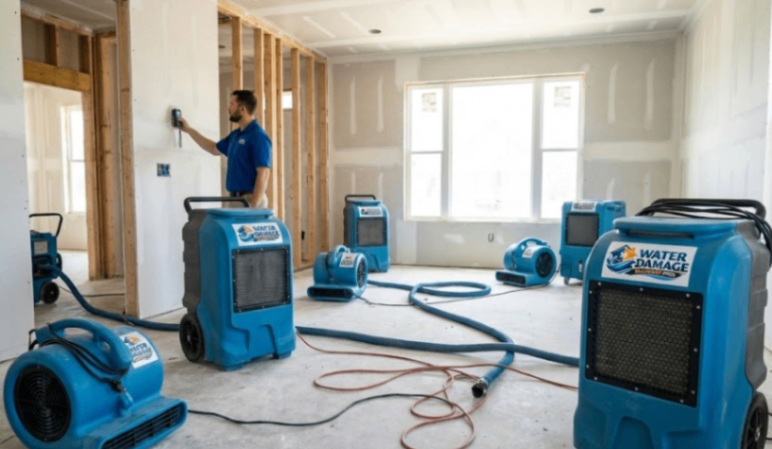
The difference between consumer and professional dehumidification equipment isn't a matter of degree—it's a difference in kind. A typical consumer dehumidifier removes 30-70 pints of water per day. A single commercial LGR (Low Grain Refrigerant) dehumidifier removes 200+ pints per day. A desiccant dehumidifier—used for specialty applications like structural drying in cold environments—can remove 400+ pints per day. A typical water-damaged basement in Northern Virginia requires the moisture removal capacity of 4-8 commercial dehumidifiers running simultaneously, plus 10-20 high-velocity air movers to create the airflow needed to pull moisture from building materials. This represents roughly 30-50 times the drying capacity of consumer equipment.
But capacity is only part of the equation. Consumer dehumidifiers simply condense moisture from the air in a room. Professional restoration drying is a controlled engineering process that manipulates temperature, humidity, and airflow to create specific conditions at material surfaces—conditions that actively pull bound moisture from inside building materials like wood framing, concrete, and drywall. Without this engineered approach, moisture remains trapped inside structural materials even when the air feels dry, creating the perfect environment for hidden mold growth.
Types of Professional Drying Equipment
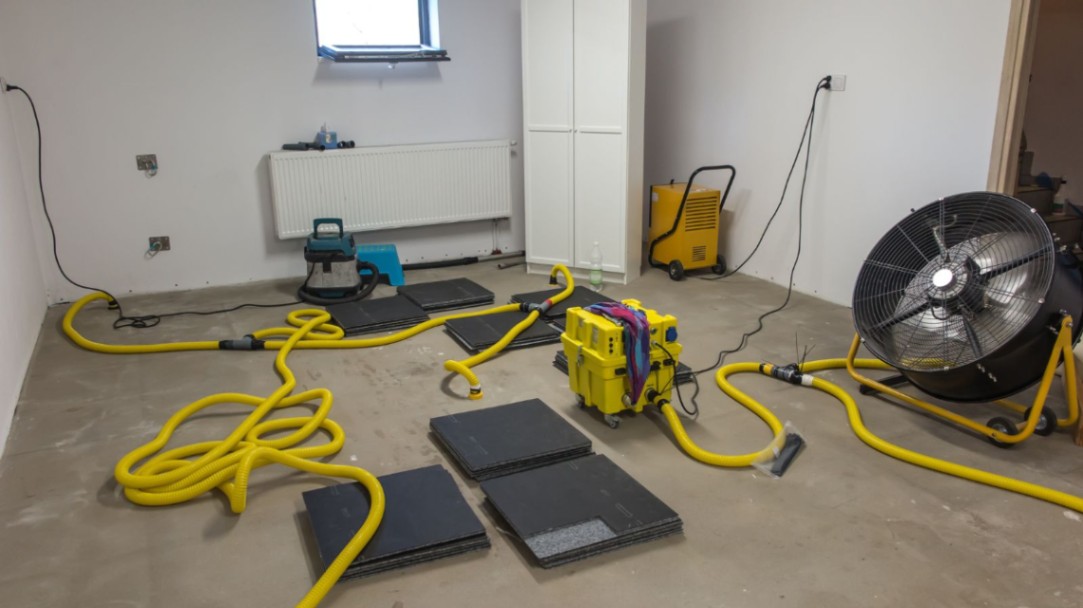
Professional restoration companies like PSolution Services use several categories of specialized equipment, each serving a specific purpose in the drying process. LGR dehumidifiers are the workhorses of water damage restoration. Using a dual-cooling system that achieves lower dew points than standard refrigerant dehumidifiers, LGR units extract moisture efficiently even at lower humidity levels—critical during the final stages of drying when removing the last percentages of trapped moisture. We deploy multiple LGR units throughout the affected space, positioning them to create overlapping drying zones.
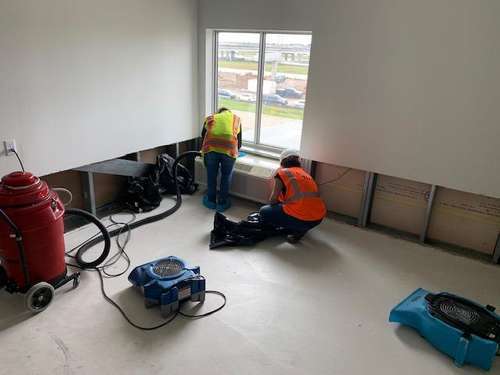
High-velocity air movers create the airflow that drives evaporation from material surfaces. These aren't ordinary fans—they produce focused, high-speed air streams that sweep across surfaces, pulling moisture into the air where dehumidifiers can capture it. Proper air mover placement is a science unto itself. Angled against wet walls, aimed across flooring surfaces, and positioned to create circular airflow patterns within the drying chamber, each unit is strategically placed based on the specific drying needs of the affected materials.
Specialty drying systems address materials that standard equipment can't efficiently dry. Injectidry systems use panels and hoses to force dry air into wall cavities, drying insulation and framing without requiring full demolition. Floor drying mats create sealed chambers over hardwood and tile floors, applying vacuum-assisted heated drying that can save flooring that would otherwise need replacement. Desiccant dehumidifiers provide extreme moisture removal for cold environments, deep-set structural drying, or situations requiring very low humidity levels.
The Science of Psychrometrics in Structural Drying
Professional structural drying is guided by psychrometric science—the study of the thermodynamic properties of moist air. Our technicians use psychrometric calculations to determine the optimal combination of temperature, humidity, and airflow for each drying scenario. By monitoring grain depression (the difference between the moisture content of air entering and leaving the drying zone), we can precisely track drying progress and adjust equipment placement daily to maintain optimal conditions.
This data-driven approach is what separates professional structural drying from simply running fans and dehumidifiers. Our technicians create drying plans, take daily moisture readings at multiple monitoring points using pin and pinless moisture meters, track progress against predicted drying curves, and make daily adjustments to equipment placement and settings. When drying is complete, we verify with quantifiable moisture readings—not guesswork—that every material in the affected space has returned to its dry standard.
Advanced Moisture Detection Technology
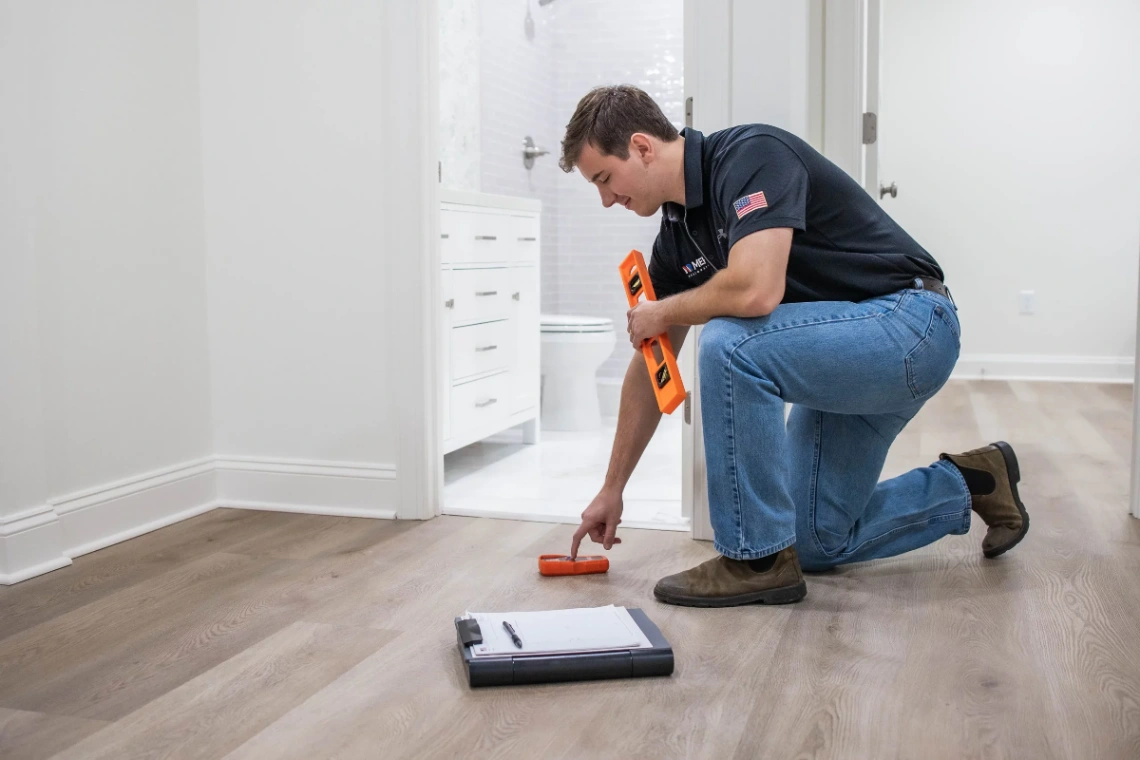
Finding all the moisture is as important as removing it. PSolution Services uses a suite of advanced detection tools. Thermal imaging (infrared) cameras reveal temperature differentials that indicate hidden moisture behind walls, above ceilings, and under floors—areas that look dry to the eye but are saturated beneath the surface. Pin moisture meters measure moisture content inside wood and other materials with precision. Pinless moisture meters use electromagnetic signals to detect moisture deep within building assemblies without creating holes. Thermo-hygrometers monitor ambient air conditions throughout the drying process.
This technology allows us to create comprehensive moisture maps of your home, identify every affected area—including hidden moisture migration that extends far beyond the visible damage—and verify that drying is truly complete before reconstruction begins. Skipping this step, or relying on the "touch test" (which is dangerously unreliable), is the number one reason post-restoration mold problems occur.
Why DIY Drying After Water Damage Fails
Homeowners who attempt DIY drying after water damage typically make several critical mistakes. Opening windows introduces uncontrolled outdoor humidity that can actually slow or reverse drying progress—especially during Northern Virginia's humid summer months. Running consumer dehumidifiers and box fans creates the appearance of drying while leaving structural materials critically wet. Not monitoring moisture levels leads to premature removal of equipment before materials have reached safe levels. Not performing targeted material removal—like cutting drywall above the wicking line—means moisture remains trapped in inaccessible areas.
The consequences of incomplete drying are severe: hidden mold growth that may not become apparent for weeks or months, structural wood deterioration, persistent odors, and degraded indoor air quality. The cost of remediating these secondary problems almost always exceeds the cost of proper professional drying in the first place.
For professional structural drying services in Northern Virginia, call PSolution Services at 571-655-7207. Available 24/7 for emergency response throughout Loudoun County, Fairfax County, and the greater Northern Virginia region.
Frequently Asked Questions: Professional Dehumidification & Drying
How long does professional structural drying take after water damage?
Most residential water damage projects in Northern Virginia require 3-5 days of monitored drying. Complex situations—deep flooding, multiple floors affected, or materials like concrete and hardwood that retain moisture longer—may require 5-7 days. Our technicians take daily moisture readings and remove equipment only when verified dry standards are met.
Is professional drying really necessary if the area seems dry?
Absolutely. The "seems dry" test is dangerously misleading. Surfaces can feel dry while structural materials inside walls, under floors, and above ceilings retain dangerous moisture levels. Professional moisture meters detect this hidden moisture. Skipping professional drying is the leading cause of post-water-damage mold problems. Read our article on why "it feels dry" is the most dangerous phrase in restoration.
How much does professional structural drying cost?
Professional drying costs depend on the size of the affected area, the number of equipment units needed, and the duration of drying. Most homeowner insurance policies cover structural drying as part of water damage restoration. PSolution Services works directly with your insurance company on all drying equipment and monitoring costs.
Will the drying equipment be noisy?
Commercial air movers and dehumidifiers do produce noise—comparable to a loud dishwasher for each unit. With multiple units running, affected areas will be noticeably louder. Most homeowners adjust to the noise within a day. We position equipment to minimize disruption to sleeping areas when possible, and the drying period typically lasts only 3-5 days.
Can professional drying save my hardwood floors?
In many cases, yes. Specialty floor drying systems apply controlled vacuum and heat through sealed mats placed over the floor surface. This technique can rescue hardwood flooring when treatment begins within 24-48 hours of water exposure. The success rate depends on the wood species, water type, and exposure duration. Learn more in our guide to water damage to hardwood floors.
{ "@context": "https://schema.org", "@type": "FAQPage", "mainEntity": [ { "@type": "Question", "name": "How long does professional structural drying take after water damage?", "acceptedAnswer": { "@type": "Answer", "text": "Most residential water damage projects in Northern Virginia require 3-5 days of monitored drying. Complex situations may require 5-7 days. Technicians take daily moisture readings and remove equipment only when verified dry standards are met." } }, { "@type": "Question", "name": "Is professional drying really necessary if the area seems dry?", "acceptedAnswer": { "@type": "Answer", "text": "Absolutely. Surfaces can feel dry while structural materials inside walls retain dangerous moisture levels. Professional moisture meters detect this hidden moisture. Skipping professional drying is the leading cause of post-water-damage mold problems." } }, { "@type": "Question", "name": "How much does professional structural drying cost?", "acceptedAnswer": { "@type": "Answer", "text": "Professional drying costs depend on the size of the affected area and duration. Most homeowner insurance policies cover structural drying as part of water damage restoration." } }, { "@type": "Question", "name": "Will the drying equipment be noisy?", "acceptedAnswer": { "@type": "Answer", "text": "Commercial air movers and dehumidifiers produce noise comparable to a loud dishwasher for each unit. Most homeowners adjust within a day. The drying period typically lasts only 3-5 days." } }, { "@type": "Question", "name": "Can professional drying save my hardwood floors?", "acceptedAnswer": { "@type": "Answer", "text": "In many cases, yes. Specialty floor drying systems apply controlled vacuum and heat through sealed mats. This technique can rescue hardwood flooring when treatment begins within 24-48 hours of water exposure." } } ] } Related Articles
Found this recovery protocol helpful?
Speak with our licensed specialists for emergency restoration in Virginia, Maryland, or DC.