Crawl Space Mold Removal in Northern Virginia: Causes, Health Risks & Professional Solutions
Why Crawl Space Mold Is So Common in Northern Virginia
Northern Virginia's climate — hot, humid summers and cold, damp winters — creates the perfect environment for mold growth in crawl spaces. These dark, enclosed areas beneath your home trap moisture from multiple sources: groundwater seepage, condensation on cold surfaces, plumbing leaks, and rising humidity from exposed earth floors. In communities across Ashburn, Leesburg, Sterling, and Fairfax, crawl space mold is one of the most common — and most overlooked — threats to both property value and family health.
The insidious nature of crawl space mold is that it often grows for months or years before anyone notices. By the time musty odors reach your living space or family members develop unexplained respiratory symptoms, the contamination may have spread extensively through floor joists, subfloor sheathing, insulation, and HVAC ductwork. At PSolution Services, our certified mold remediation team specializes in crawl space environments, using containment protocols and negative air pressure systems designed specifically for confined-space remediation.
Signs You Have Mold in Your Crawl Space
Most homeowners in Loudoun County and Fairfax County never enter their crawl spaces, which is why mold can proliferate undetected. However, there are telltale signs that indicate a problem below your floor. Musty or earthy odors that seem to come from nowhere — especially noticeable when your HVAC system runs — often indicate active mold colonies beneath the house. Increased allergy symptoms, persistent coughing, or unexplained respiratory issues among family members can signal airborne mold spores entering your living space through gaps in the subfloor or via your ductwork.
Visible signs include warped or buckled hardwood flooring, moisture stains on first-floor ceilings, condensation on windows, and higher-than-normal indoor humidity readings. If your energy bills have increased unexpectedly, it may indicate that moisture-damaged insulation in the crawl space has lost its effectiveness. Any of these signs warrant a professional mold inspection by trained technicians with proper equipment.
Health Risks of Crawl Space Mold
Crawl space mold doesn't stay in the crawl space. Through a phenomenon called the stack effect, warm air rising through your home creates negative pressure that draws air upward from the crawl space into your living areas. Research indicates that up to 40% of the air you breathe on your first floor originates from the crawl space below. When that space contains active mold colonies, you and your family are breathing mold spores every day.
Common mold species found in Virginia crawl spaces include Aspergillus, Penicillium, Cladosporium, and in severe cases, Stachybotrys chartarum (black mold). Exposure symptoms range from nasal congestion, sneezing, and eye irritation to more serious conditions including chronic sinusitis, bronchitis, and asthma exacerbation. Children, elderly family members, and immunocompromised individuals are particularly vulnerable. Long-term exposure to certain mold species has been linked to more serious health complications.
What Causes Crawl Space Mold in Virginia?
Excessive Groundwater and Poor Drainage
Many homes in Reston, Herndon, and throughout Northern Virginia sit on clay-heavy soils that retain water. When drainage systems fail or were never properly installed, groundwater seeps into crawl spaces and raises humidity levels above the critical 60% threshold where mold thrives. After heavy rain or flooding events, standing water in crawl spaces can persist for weeks without intervention.
Inadequate Ventilation
Older homes were built with vented crawl spaces based on the assumption that outside air would carry moisture away. In Virginia's humid climate, the opposite often happens — warm, humid summer air enters the cooler crawl space and condenses on surfaces, creating persistent moisture. Building science has evolved to favor sealed, conditioned crawl spaces, but many homes in Loudoun County and Fairfax County still operate on outdated ventilation designs.
Plumbing Leaks
Slow plumbing leaks under your home may drip for months before creating enough damage to notice. Even a small leak — a fraction of a gallon per day — provides more than enough moisture to sustain an extensive mold colony. Our technicians frequently discover active plumbing leaks during crawl space mold inspections that the homeowner was completely unaware of.
Missing or Damaged Vapor Barriers
The exposed earth floor in an uncovered crawl space continuously releases moisture vapor into the air. A proper 6-mil or thicker polyethylene vapor barrier is essential for controlling ground moisture. Torn, shifted, or missing vapor barriers are among the most common contributing factors we see during remediation projects across Northern Virginia.
Our Crawl Space Mold Remediation Process
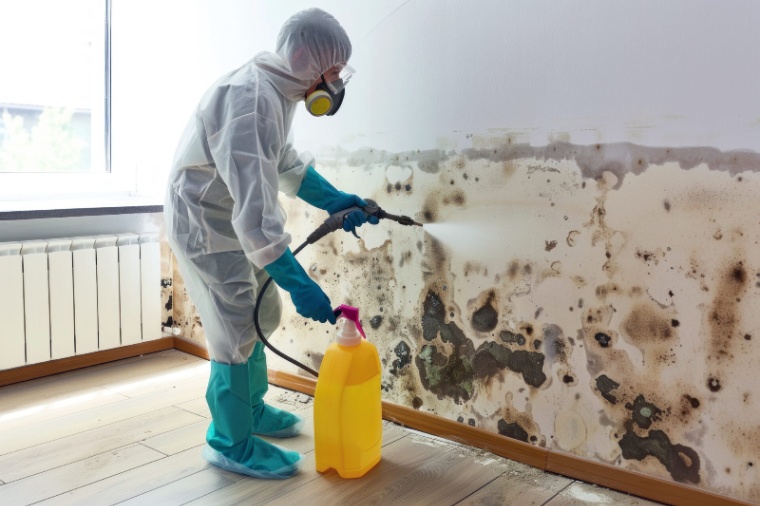
PSolution Services follows IICRC S520 protocols for all mold remediation projects, with additional specialized procedures for confined-space work. Our process begins with a comprehensive inspection using moisture meters, hygrometers, and visual assessment to determine the full scope of contamination. We then establish containment barriers and negative air pressure using HEPA-filtered air scrubbers to prevent cross-contamination to your living space.
Affected materials are carefully removed or treated in place depending on the substrate. Structural wood components — floor joists, rim joists, subfloor sheathing — are media-blasted or sanded to remove surface mold, then treated with EPA-registered antimicrobial coatings. Non-salvageable materials like mold-damaged insulation are safely removed and disposed of according to Virginia DEQ guidelines. After remediation, we verify success with post-remediation clearance testing.
Preventing Crawl Space Mold: Long-Term Solutions
Remediation without addressing the moisture source guarantees mold will return. We recommend crawl space encapsulation — sealing the space with a heavy-duty vapor barrier system, insulating foundation walls, and installing a commercial dehumidifier to maintain humidity below 50%. Proper exterior grading and drainage solutions direct water away from your foundation. French drain systems or sump pump installation may be necessary for homes with persistent groundwater issues.
For homes with compromised ventilation, converting from a vented to a sealed crawl space is one of the most impactful investments you can make — reducing mold risk, improving energy efficiency, and enhancing indoor air quality simultaneously.
Frequently Asked Questions About Crawl Space Mold
How much does crawl space mold remediation cost in Northern Virginia?
Costs vary based on the size of your crawl space, extent of contamination, and necessary repairs. Typical crawl space mold remediation in the Northern Virginia area ranges from $2,000 to $8,000. Encapsulation with remediation may range higher. We provide free inspections and detailed estimates before any work begins. Call 571-655-7207 for a consultation.
Does homeowner's insurance cover crawl space mold removal?
Coverage depends on the cause. Mold resulting from a sudden covered event — like a burst pipe — is typically covered. Mold from long-term neglect, poor maintenance, or humidity issues is usually excluded. Our team provides documentation that clearly establishes the cause, which can help with insurance claim filing.
How long does crawl space mold remediation take?
Most crawl space remediation projects take 2-4 days, depending on the size of the space and extent of contamination. Encapsulation adds 1-2 additional days. We schedule work to minimize disruption to your daily routine — most homeowners continue living normally during the process.
Can I remove crawl space mold myself?
DIY crawl space mold removal is strongly discouraged. Crawl spaces are confined, poorly ventilated environments where mold spore concentrations are extremely high. Without proper PPE, containment, and HEPA filtration, you risk exposing yourself to dangerous spore levels and spreading contamination to your living space. Professional remediation with proper equipment is essential for safe, complete removal.
How do I know if the mold is gone after remediation?
We perform post-remediation verification using visual inspection and air quality testing. Air samples are analyzed by an independent laboratory to confirm spore counts have returned to normal background levels. You receive a written clearance report documenting successful remediation.
Service Areas for Crawl Space Mold Removal
PSolution Services provides crawl space mold inspection and remediation throughout Northern Virginia, including Ashburn VA, Leesburg VA, Sterling VA, Fairfax VA, Reston VA, Herndon VA, Loudoun County VA, Fairfax County VA, and all surrounding communities. Call 571-655-7207 for a free crawl space inspection.
Related Articles
• Mold Remediation in Loudoun County VA: Signs, Health Risks & Professional Removal
• How to Prevent Mold After Flooding in Virginia
• The "M" Word: What to Do When Mold Invades Your Space
• Why "It Feels Dry" is the Most Dangerous Phrase in Restoration
• Why Structural Drying Is the Most Important Step After Water Damage
• Basement Flooding in Ashburn VA: Causes, Cleanup & Protection
Found this recovery protocol helpful?
Speak with our licensed specialists for emergency restoration in Virginia, Maryland, or DC.