Repair vs. Full Restoration: How to Decide What Your Northern Virginia Home Needs
Understanding the Difference: Repair vs. Full Restoration
After water damage, fire damage, or mold remediation in your Northern Virginia home, one of the most important decisions you'll face is whether individual repairs are sufficient or whether full interior restoration is needed. This choice affects your home's structural integrity, indoor air quality, long-term property value, and — most practically — your budget and timeline. At PSolution Services, our interior restoration specialists help homeowners in Ashburn, Leesburg, Sterling, Fairfax, and throughout Northern Virginia make informed decisions based on the specific conditions in their home.
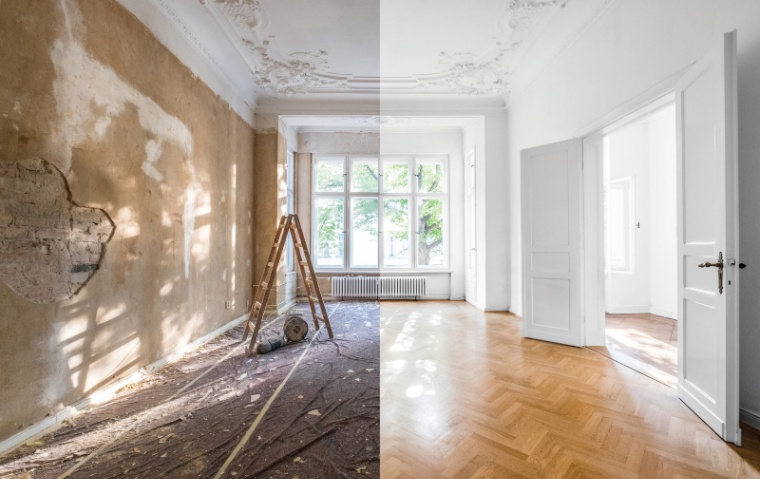
The distinction matters more than most homeowners realize. Cosmetic repairs — patching drywall, repainting, replacing a section of carpet — address what you can see. Full restoration addresses what you can't: moisture trapped inside wall cavities, compromised structural framing, contaminated insulation, and damage to systems (electrical, plumbing, HVAC) that lie hidden behind finished surfaces. Choosing the wrong approach can mean paying twice — once for the initial repair and again when hidden damage manifests as mold growth, structural failure, or indoor air quality problems months later.
When Repair Is the Right Choice
Not every damage scenario requires a full restoration. Targeted repairs are appropriate when the damage is genuinely limited in scope and hasn't compromised underlying structural or mechanical systems. For example, a small roof leak caught quickly that only wetted a localized area of ceiling drywall — with no moisture reaching the attic insulation or wall cavities — can often be addressed with targeted drywall repair and repainting after proper drying is confirmed.
Surface-level fire damage — smoke staining and soot deposits on intact finishes — can sometimes be resolved with professional cleaning and repainting rather than full demolition and rebuild. Cosmetic scratches, dents, and minor damage from the restoration equipment itself fall into the repair category. The key qualifier is that professional moisture testing and inspection must confirm there is no hidden damage before repairs proceed. If there's any doubt, a more thorough investigation is warranted.
When Full Restoration Is Necessary
Full interior restoration becomes necessary when damage has penetrated beyond surface materials into the building's structural systems. Here are the scenarios where our team in Loudoun County and Fairfax County consistently recommends comprehensive restoration over patching.
Extensive Water Damage
When water has been present for more than 48 hours, or when structural drying reveals moisture migration through wall cavities, subfloor systems, or insulation, repair alone is insufficient. Drywall that has absorbed water loses structural integrity even after drying — it becomes chalky, weakened, and prone to mold growth behind paint. Subfloor materials (especially particleboard and OSB) swell permanently when saturated and must be replaced to provide a stable surface for finished flooring.
Fire and Smoke Damage
Fire generates temperatures that compromise building materials even where flames didn't directly reach. Heat-affected drywall becomes brittle and crumbles. Structural wood exposed to high temperatures may lose load-bearing capacity. Smoke particles penetrate deeply into porous materials through a process called adsorption, creating persistent odors that no amount of surface cleaning can eliminate. Read more about the hidden impacts in our article on why smoke damage is the real enemy.
Post-Mold Remediation
After professional mold remediation, the affected building materials that were removed — drywall, insulation, carpet, trim — need to be replaced with new materials. This is an opportunity to upgrade insulation values, improve moisture barriers, and install mold-resistant drywall in vulnerable areas like bathrooms, kitchens, and crawl spaces. Simply patching over remediated areas without proper reconstruction leaves your home vulnerable to recurrence.
Structural Compromise
When framing members — wall studs, floor joists, headers, or load-bearing elements — have been weakened by water saturation, fire, or biological decay, the reconstruction process must include structural evaluation and potentially sistering or replacing affected members. This is non-negotiable for safety and code compliance. Our teams work with structural engineers when damage raises questions about load-bearing capacity.
The PSolution Full Interior Restoration Process
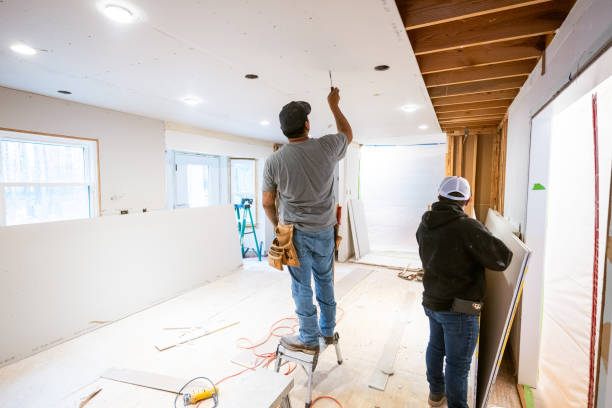
Our full-service interior reconstruction process is designed to return your home to pre-damage condition — or better. We begin with controlled demolition of damaged materials, carefully preserving any salvageable elements. This reveals the full extent of hidden damage and allows our technicians to assess structural, electrical, plumbing, and HVAC systems that were concealed behind finished surfaces.
Structural repairs come first: replacing or reinforcing any compromised framing, treating wood components with preservatives where appropriate, and ensuring the building envelope is sound. Rough mechanical systems — electrical rewiring, plumbing repairs, HVAC duct replacement — follow. Insulation is installed (we recommend upgraded values whenever replacement is needed), followed by precision drywall installation, taping, mudding, and finishing. Finally, painting, trim installation, flooring, and specialty finishes complete the restoration.
Building Back Better: Upgrade Opportunities During Restoration
One significant advantage of full restoration is the opportunity to improve your home beyond its original condition. While walls are open, consider upgrading to mold-resistant drywall in moisture-prone areas. Improve insulation values from older R-11 to modern R-15 or R-21 specifications. Upgrade electrical wiring and outlets to current code requirements, including GFCI and AFCI protection. Install modern plumbing connections that are less likely to fail. Add additional lighting, outlets, or data connections that would be expensive to retrofit later. Homeowners in Reston, Herndon, and throughout Northern Virginia frequently tell us that their restored spaces look and function better than the originals.
How Long Does Full Interior Restoration Take?
Timeline depends heavily on scope. A single-room restoration — one bedroom with water-damaged drywall, insulation, and flooring — typically takes 5-7 business days from demolition through final touch-up. Multi-room restorations following extensive water damage or fire range from 2-6 weeks. Whole-home restorations after catastrophic events can take 2-4 months. We provide detailed project schedules at the start of every job, with regular milestone updates throughout the process.
Frequently Asked Questions About Interior Restoration
How do I know if my home needs repair or full restoration?
A professional assessment with moisture meters, thermal imaging, and visual inspection is the only reliable way to determine the right approach. We provide free assessments throughout Northern Virginia. Call 571-655-7207 to schedule an evaluation.
Does insurance cover full interior restoration?
When the damage results from a covered event (water damage, fire, storm), your policy typically covers restoration to pre-loss condition, including materials and labor. Upgrades beyond pre-loss condition are generally the homeowner's responsibility. Our team maximizes your coverage through thorough documentation. See our insurance claims guide for more details.
Can I choose my own finishes during restoration?
Absolutely. While your insurance covers like-kind replacement, you're welcome to upgrade finishes by paying the difference. Many homeowners choose to upgrade flooring, paint colors, fixtures, and trim during restoration. We provide samples and design guidance to help you make selections you'll love.
Do I need to move out during full restoration?
For multi-room or whole-home restorations, temporary relocation is usually recommended for comfort and safety. For single-room projects, you can typically remain in the home with some inconvenience. Your insurance may cover additional living expenses (ALE) during restoration. We coordinate with your adjuster to ensure coverage.
What warranty do you provide on restoration work?
PSolution Services provides a comprehensive workmanship warranty on all restoration projects. Materials carry their manufacturer warranties. Specific warranty terms are documented in your project agreement before work begins.
Service Areas for Interior Restoration
PSolution Services provides interior restoration and reconstruction services throughout Northern Virginia, including Ashburn VA, Leesburg VA, Sterling VA, Fairfax VA, Reston VA, Herndon VA, Loudoun County VA, Fairfax County VA, and all surrounding communities. Call 571-655-7207 for a free restoration assessment.
Related Articles
• From Disaster to Designer: Rebuilding Better Than Before
• Drywall Repair After Water Damage: When to Repair vs. Replace
• Making it Seamless: The Art of Drywall Restoration
• Fire and Smoke Damage Restoration in Fairfax County VA
• Best Property Restoration Company in Ashburn & Northern Virginia
Found this recovery protocol helpful?
Speak with our licensed specialists for emergency restoration in Virginia, Maryland, or DC.