Sewage Backup Cleanup Northern Virginia | Emergency Contamination Restoration
Sewage Backup Cleanup in Northern Virginia: Immediate Professional Response Required
A sewage backup is one of the most hazardous and stressful emergencies a Northern Virginia homeowner can face. Raw sewage flooding into your basement, bathroom, or utility area introduces dangerous pathogens—bacteria, viruses, parasites, and fungi—that pose serious health risks to your family and require immediate professional biohazard decontamination. This is classified as Category 3 "black water" under IICRC standards, the most severe contamination category, and is never safe to clean up without proper training, equipment, and protective protocols.
PSolution Services provides 24/7 emergency sewage backup cleanup throughout Northern Virginia, including Ashburn, Leesburg, Sterling, Centreville, Reston, Herndon, Vienna, McLean, Great Falls, Fairfax, and all of Loudoun and Fairfax Counties. Our biohazard-certified technicians respond within 60 minutes, equipped with full personal protective equipment, commercial extraction systems, and EPA-registered antimicrobial agents to safely restore your home.
What Causes Sewage Backups in Northern Virginia Homes?
Sewage backups in Northern Virginia occur for several reasons, many of which are outside the homeowner's control. Municipal sewer line overloads during heavy rainfall events are common throughout the region—Northern Virginia's rapid development has put pressure on aging infrastructure, and heavy storms can overwhelm combined sewer systems, forcing sewage back through residential connections. Tree root intrusion into sewer laterals is another frequent cause, particularly in established neighborhoods with mature trees where roots have had decades to infiltrate pipe joints. Additional causes include collapsed or deteriorated sewer laterals in older neighborhoods, sump pump failures during power outages, septic system failures on rural properties, and blockages from grease buildup, "flushable" wipes, and other materials that don't break down in sewer lines.
Health Risks of Sewage Exposure
Raw sewage contains pathogenic organisms that can cause severe illness. E. coli, Salmonella, Hepatitis A, rotavirus, Giardia, and Cryptosporidium are among the most common biological hazards found in sewage water. Exposure through skin contact, ingestion, or inhalation of aerosolized particles can cause gastrointestinal illness, respiratory infections, skin infections, and more serious conditions in vulnerable individuals. Children, elderly persons, pregnant women, and anyone with a compromised immune system are at highest risk.
Beyond biological hazards, sewage water often contains chemical contaminants—household cleaning products, pharmaceutical residues, and industrial chemicals—that compound the health risk. The gases produced by decomposing sewage, including hydrogen sulfide and methane, can cause respiratory irritation and, in confined spaces, create toxic or explosive atmospheres. This is why DIY sewage cleanup is never recommended—the risks are simply too high without proper training and equipment.
Our Sewage Backup Cleanup Process
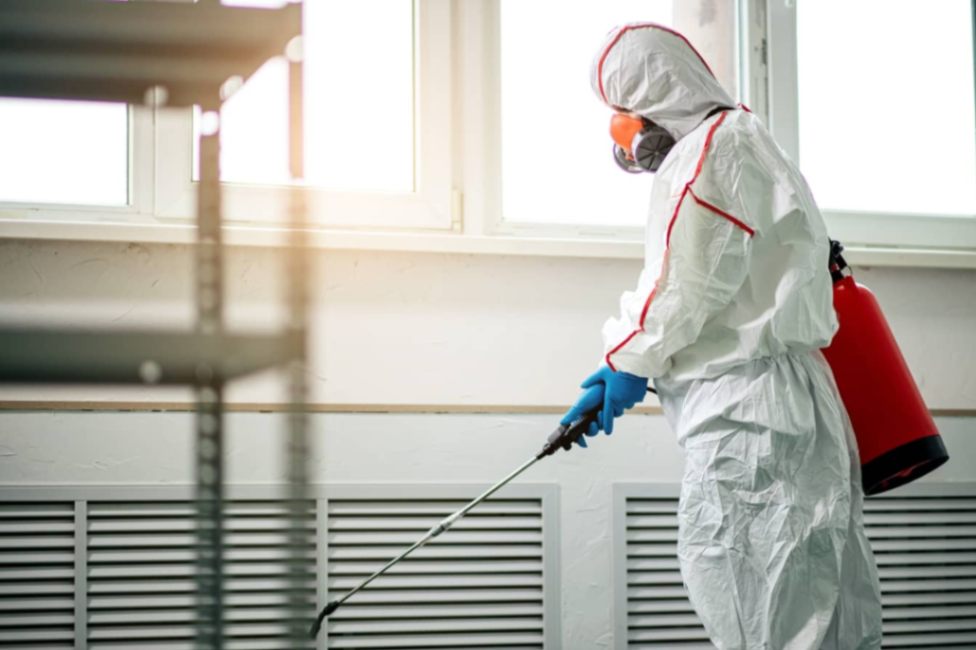
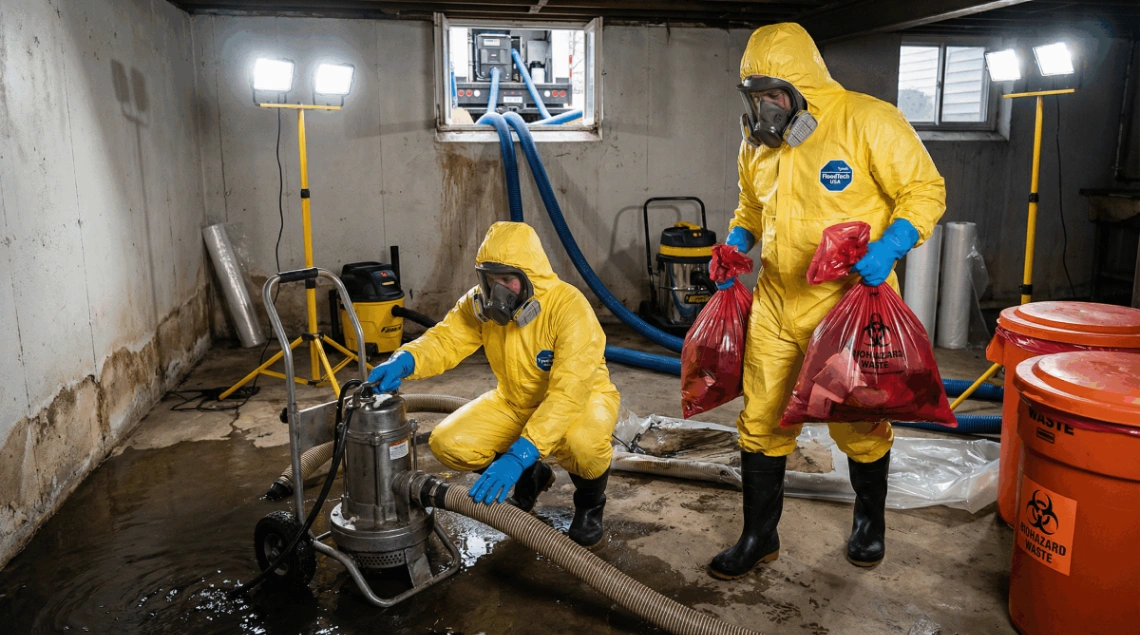
PSolution Services follows strict IICRC S500 and ANSI/IICRC S540 protocols for all Category 3 water damage. Our sewage cleanup process begins with safety assessment and area isolation. We establish contamination zones and ensure no one enters the affected area without proper PPE—full-body Tyvek suits, N95 or P100 respirators, chemical-resistant gloves, and sealed boots.
Water extraction uses dedicated contaminated-water equipment that is thoroughly disinfected after each use. Every porous material contacted by sewage—carpet, padding, drywall below the flood line, insulation, particleboard, and upholstered furniture—must be removed and disposed of as biohazardous waste. There is no safe way to clean and retain these materials after Category 3 contamination.
After material removal, we apply EPA-registered hospital-grade disinfectants to all remaining surfaces—concrete, framing, subflooring, and any salvageable non-porous materials. Multiple application rounds ensure complete pathogen elimination. Structural drying with HEPA-filtered air scrubbers follows, reducing moisture levels to safe standards while filtering biological contaminants from the air. Post-cleanup verification includes ATP testing (adenosine triphosphate bioluminescence) to confirm surfaces meet hospital-grade cleanliness standards.
Reconstruction After Sewage Damage
Once decontamination and drying are complete, reconstruction begins. Drywall replacement, insulation installation, flooring replacement, and complete interior restoration return your home to pre-loss condition. We handle the entire process—from emergency extraction through final paint touch-ups—so you have a single point of contact and consistent quality throughout.
Insurance Coverage for Sewage Backup Damage
Standard homeowner insurance policies in Virginia often exclude sewer backup coverage unless the homeowner has purchased a specific sewer backup endorsement (also called "water backup" coverage). This endorsement is relatively inexpensive—typically $50-100 per year—and covers damage from sewer line backups, sump pump failures, and drain overflow. PSolution Services strongly recommends all Northern Virginia homeowners verify they have this coverage. We work with your insurance company to document the damage, provide required estimates, and facilitate the claims process.
For immediate sewage backup emergency response in Northern Virginia, call PSolution Services at 571-655-7207. Available 24/7. We serve all of Loudoun County, Fairfax County, and the greater Northern Virginia region. Don't attempt to clean sewage yourself—the health risks are too severe. Let our certified biohazard team handle it safely.
Frequently Asked Questions: Sewage Backup Cleanup in Northern Virginia
Is sewage backup dangerous to clean up myself?
Yes—extremely dangerous. Raw sewage contains pathogenic bacteria, viruses, and parasites that can cause serious illness. Professional biohazard cleanup with proper PPE, commercial disinfectants, and contaminated material disposal is the only safe approach. Call PSolution Services at 571-655-7207 for immediate professional response.
Does homeowner insurance cover sewage backup damage?
Only if you have a sewer/water backup endorsement on your policy. Standard homeowner insurance typically excludes sewer backup. Check your policy or call your insurance agent to verify. PSolution Services recommends all Northern Virginia homeowners add this affordable coverage.
What materials need to be removed after sewage contamination?
All porous materials contacted by sewage must be removed and disposed of—including carpet, padding, drywall below the flood line, insulation, particleboard, and upholstered furniture. Non-porous materials like concrete, metal, and some hardwoods can be professionally disinfected and retained.
How long does sewage backup cleanup take?
Emergency extraction and decontamination typically take 1-2 days. Structural drying requires an additional 3-5 days. Complete restoration including drywall, flooring, and finishing may take 1-3 weeks depending on the extent of damage. We provide detailed timelines during our initial assessment.
How can I prevent sewer backups in my Northern Virginia home?
Install a backwater valve on your sewer lateral to prevent municipal overflows from entering your home. Maintain your sewer line with periodic camera inspections and root treatment. Never flush wipes, grease, or other non-degradable materials. Install a battery backup on your sump pump. For septic systems, maintain regular pumping schedules. Learn more about preventing basement flooding.
Related Articles
Found this recovery protocol helpful?
Speak with our licensed specialists for emergency restoration in Virginia, Maryland, or DC.